
Comparing a mason’s hourly rate with a carpenter’s means comparing two very different cost structures. The price shown on a quote reflects the trade, the region, the type of project and the contractor’s tax status. Rates observed across mainland France provide a useful benchmark for assessing a quote, as long as you look beyond the hourly figure alone.
Mason and carpenter hourly rates: typical ranges
Data compiled by several industry surveys point to consistent ballpark figures for labor only, excluding materials and travel.
| Trade | Observed range, excl. VAT | Indicative average rate |
|---|---|---|
| Mason | 35 – 55 €/h | 45 €/h |
| Carpenter | 35 – 60 €/h | 48 €/h |
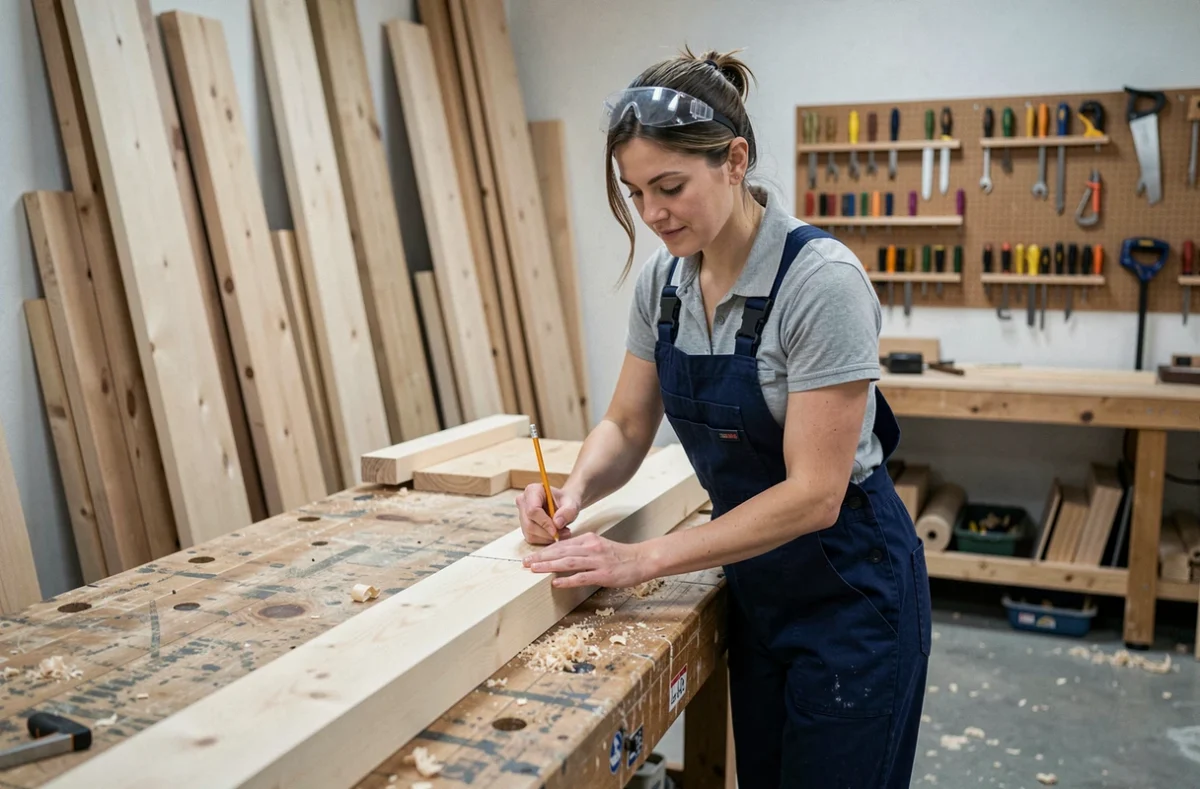
Carpenters have a higher upper rate than masons. This difference reflects the nature of the work: installing a custom staircase or making a wooden frame requires specialist tools and workshop preparation time, which may not always be itemized on the quote.
In the Île-de-France region, rates are regularly found to be around 20 to 40% higher than the national averages across all trades. For a detailed overview of hourly rates for masons and carpenters, regional price lists provide a useful complement to these national averages.
VAT and certification: what changes the total on your invoice
The hourly rate excluding VAT stays the same, but the applicable VAT rate changes the actual cost to the customer. Three scenarios apply to work carried out in a home completed more than two years ago.
- 10% VAT for improvement, alteration or maintenance work (a mason installing a partition wall, or a carpenter replacing a window).
- 5.5% VAT for certain energy-efficiency renovation work (such as insulating exterior joinery).
- 20% VAT when the work contributes to the construction of a new building, even if the contractor is working on an existing structure.
According to impots.gouv.fr, customers must now certify on the quote or invoice that the conditions for applying the reduced rate have been met. The standard or simplified certificate, previously required in every case, is no longer needed in this context.
A quote for exterior carpentry with 5.5% VAT instead of 20% can make a significant difference to the final amount. Checking the rate before signing is one of the most cost-effective steps a homeowner can take.
Why the hourly rate alone isn’t enough to compare two quotes
A mason charging €40/h and a carpenter charging €55/h cannot be compared on that basis alone. The hourly rate covers labor, not the total cost of the project. Several other items can increase or reduce the final bill.
Materials and supplies
In masonry, materials (concrete blocks, cement, reinforcing steel) are often charged separately and can account for a substantial share of the quote. In carpentry, the price of wood, aluminum or PVC varies considerably depending on the wood species or profile selected. A carpenter supplying solid oak will not quote the same price as one installing pine.
Fixed price or hourly rate
Not all building contractors charge by the hour. Fixed-price or per-square-meter billing is common, particularly for masonry projects (a concrete slab, a boundary wall) or standard carpentry installations (windows, interior doors). In these cases, the hourly rate may not appear on the quote at all, making a direct comparison impossible.
Travel and preparation costs
A mason travels to the site in a utility vehicle loaded with heavy equipment. A carpenter splits their time between the workshop (cutting and assembly) and on-site installation. Travel costs may appear as a separate line item or be included in the hourly rate. Always asking for an itemized breakdown helps avoid surprises.
Building cost indices: tracking how costs change by trade
Hourly rates published on online quote websites are snapshots. For a clearer picture of trends, the Insee’s building cost indices provide a more reliable guide. Insee publishes separate indices for masonry and joinery (interior, exterior, steel or PVC). These indices are used to adjust construction contract prices and reflect changes in labor, materials and energy costs specific to each trade.
Masonry and carpentry do not follow the same trend. The cost of steel and cement affects masonry, while timber and aluminum prices have a greater impact on carpentry. A contractor adjusting their rates from one year to the next bases them—or should base them—on these indices rather than simply matching local competitors.
These indices never appear on a homeowner’s quote. Their value is indirect: understanding that a rate increase may reflect a genuine rise in costs, rather than simple opportunism, can help you negotiate or accept a price with a clearer understanding of the reasons behind it.
The hourly rate for a mason or carpenter is only a starting point. The final amount including VAT depends on the applicable VAT rate, the contractor’s billing method and the cost of materials specific to the project. Reviewing a quote line by line, checking the VAT rate and comparing complete quotes—not isolated hourly rates—remains the most reliable way to choose between two proposals.