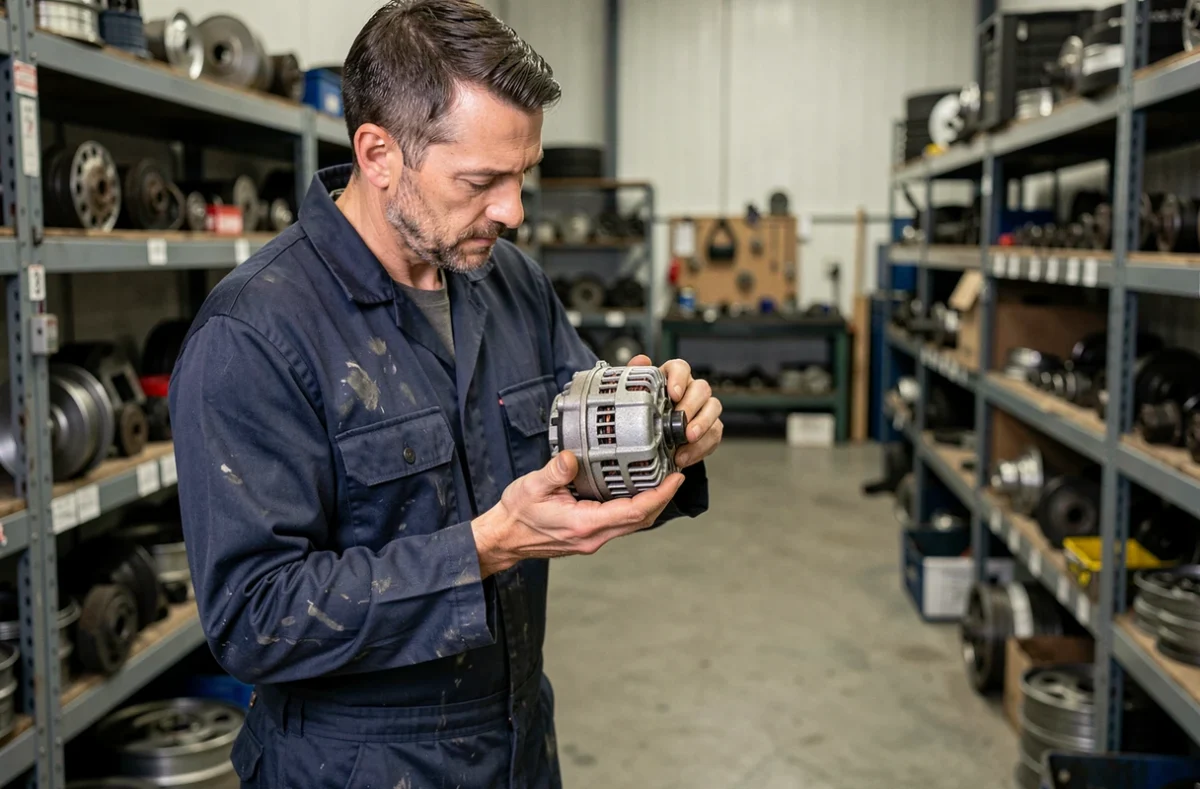
Your battery warning light comes on, the headlights dim, and the car stereo cuts out intermittently. The alternator is probably to blame. When it’s time to replace it, you have two options: buy a new alternator or choose a used part. The price can vary by as much as threefold, but the price tag doesn’t tell you everything about the part’s reliability or actual lifespan.
Diagnosis before purchase: make sure the alternator is the problem
Before ordering anything, you first need to confirm the fault. An illuminated charging warning light doesn’t always mean the alternator has failed. On newer vehicles with smart charging systems, the output voltage varies depending on driving conditions and the battery’s condition.
Carry out these three checks before drawing a conclusion:
- Check the voltage at the battery terminals with the engine running (a stable reading within the normal range indicates that the alternator is working)
- Inspect the accessory belt: a loose or worn belt reduces drive and can mimic an alternator failure
- Check the electrical connections, especially the ground cable and charging terminal, which can corrode over time
If the battery itself is nearing the end of its life, it may draw current without ever reaching a full charge. This can look like a faulty alternator. Replacing a working alternator is an expensive waste, which is why an accurate diagnosis is essential, ideally using an engine data reader on newer models.
This point is rarely covered in new-versus-used comparisons, but it affects everything else. A misdiagnosis turns any purchase, new or used, into an unnecessary expense.
Used alternator: what the low price does (and doesn’t) tell you
A used alternator comes from a dismantled vehicle, often at a salvage yard. It has already been in service for an unknown length of time and under unknown conditions. Its main advantage is its price, which is significantly lower than that of a new part.
Have you noticed that two used alternators of the same model can be in very different condition? One may have come from a city car with few electrical accessories, while the other may have powered a utility vehicle loaded with equipment. The usage history is the biggest unknown when buying used.
That said, buying used isn’t always a losing bet. If you buy from a professional seller, the statutory guarantee of conformity applies, including to used parts. This guarantee is separate from any commercial warranty: it is provided for by law and covers conformity defects, even in parts that have already been used. Be sure to ask for the terms in writing, particularly what is covered if the part fails.
Regulations also require automotive repair professionals, under certain conditions, to offer parts from the circular economy. Alternators are among the categories covered. When it comes to choosing between a new or used alternator, it’s worth knowing about this legal option, although exceptions apply when the part isn’t available within a timeframe compatible with the repair.
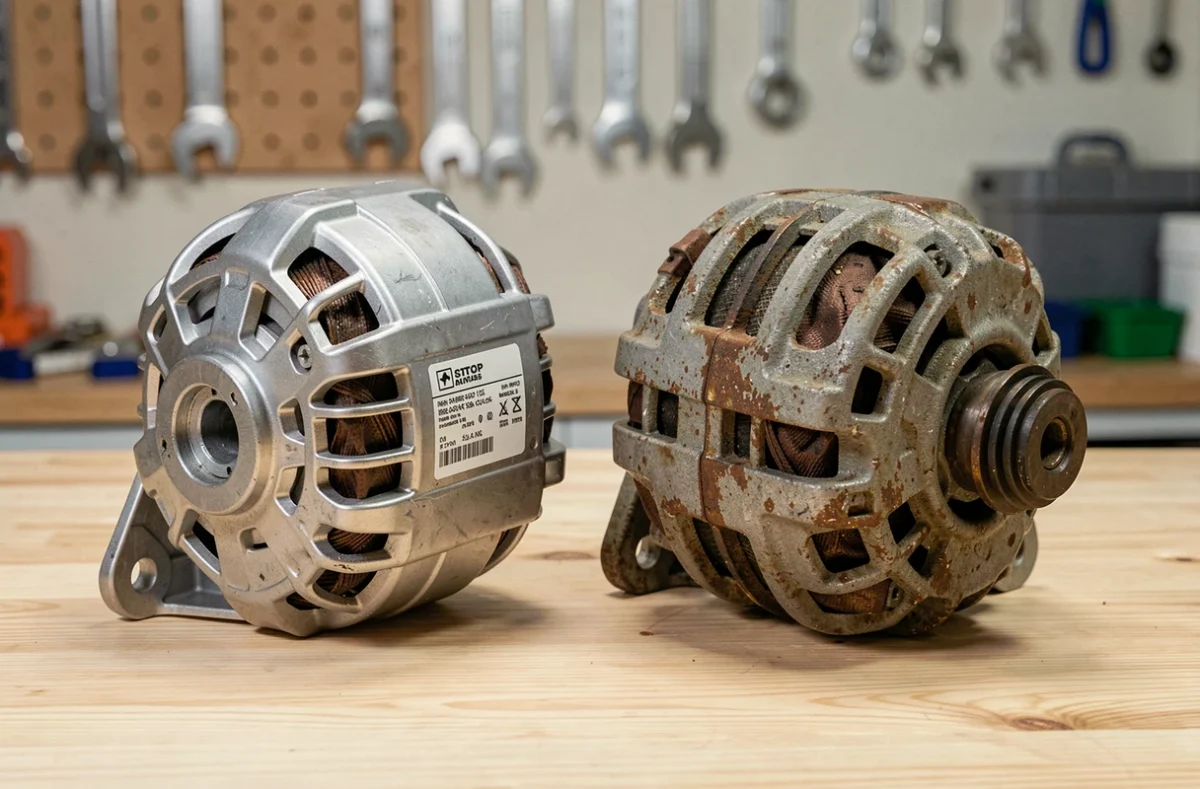
New alternator: guaranteed reliability and compatibility
A new alternator comes straight from the factory with components that have never been used: rotor, stator, voltage regulator, bearings, and pulley. Each component meets the manufacturer’s specifications for a specific vehicle model.
Mechanical and electrical compatibility is the first thing to check. An alternator must match the vehicle’s original part number—not just in amperage, but also in mounting type, pulley diameter, and connectors. Getting any of these details wrong can prevent installation or cause a malfunction.
Why does this matter more than the price? Because an incompatible alternator won’t charge properly, even if it’s new. On some vehicles, the electronic management system adjusts charging based on the alternator model registered in the control unit. Installing a different part number can trigger fault codes or result in incorrect charging.
Amperage: don’t undersize
The alternator’s amperage must be at least equal to the original specification. If additional electrical accessories have been added to the vehicle (an electric trailer hitch, auxiliary lights, a powerful audio system), an alternator with the same amperage may be pushed to its limit.
An undersized alternator wears out faster because it operates at maximum load all the time. In this situation, a new alternator with slightly higher amperage (provided the mounting and pulley are compatible) is a better investment than a used model with just enough capacity.
New or used: what factors tip the balance?
The choice isn’t just about budget. It also depends on how long you expect to keep the vehicle and how you use it day to day.
If the vehicle has several years of service left, a new alternator’s higher upfront cost pays off over time. New bearings, a new regulator, and a new pulley offer the longest expected service life.
On the other hand, if an older vehicle is only expected to be used for a few more months or a year or two, investing in a new part may seem excessive. A used alternator in good condition, bought from a professional seller with a warranty, can be a perfectly suitable choice.
What to check on a used alternator
Before committing to a used alternator, a few physical checks can help you rule out parts that are too worn:
- Turn the pulley by hand: it should spin freely, with no lateral play or bearing noise
- Check the condition of the regulator connector (no corrosion, pins straight)
- Inspect the slip rings if they’re accessible: deep grooves indicate significant brush wear
- Make sure the part number matches the vehicle exactly, including the pulley type (freewheel pulley or overrunning pulley)
A carefully inspected used alternator can be just as reliable as a new one in a vehicle nearing the end of its life. The key is a physical inspection and a warranty from the seller.
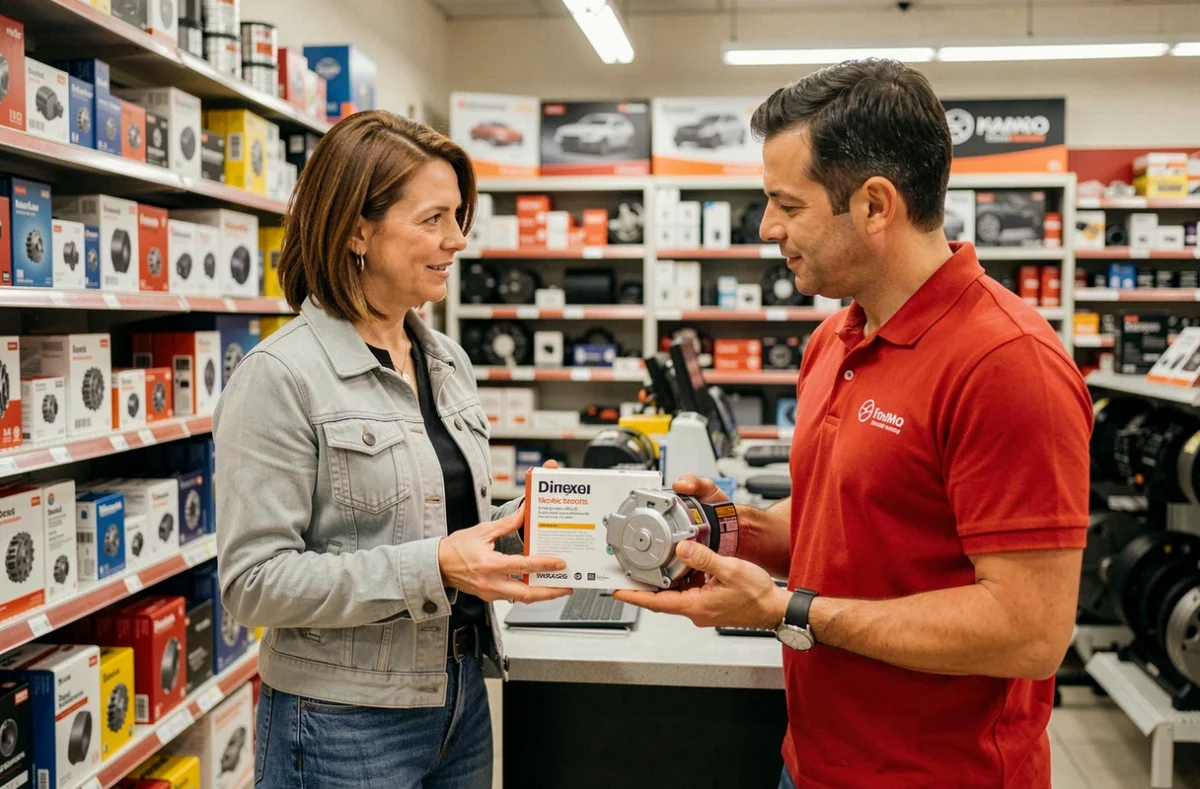
Replacing an alternator isn’t a decision to take lightly. When choosing between new and used, the right option depends less on the price tag than on the initial diagnosis, technical compatibility, and how long you plan to keep the vehicle. An alternator that’s a perfect fit, whether new or used, is always better than the wrong part.