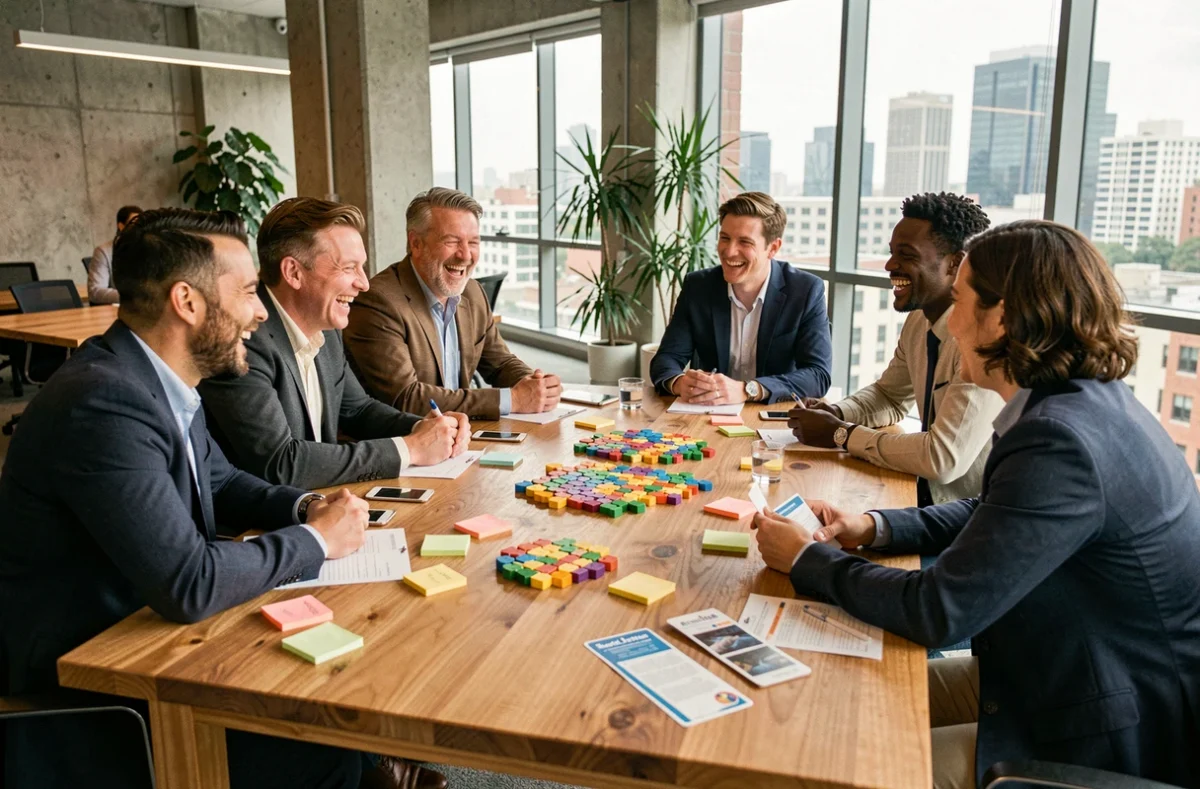
A back-to-school seminar where half the participants pick up their phones as soon as the second activity starts, we’ve all experienced that. The problem doesn’t stem from the budget or the location, but from the format offered. Energizing a corporate event with fun activities means going beyond mere entertainment to produce something useful for the teams present.
Fun activities in the workplace: why entertainment alone is no longer enough
Professional events are now compared to digital formats that can convey information faster and at a lower cost. Employees who physically attend expect useful meetings, real participation, and an experience that justifies their presence. A karaoke session or a generic quiz no longer fulfills this contract.
There is a clear shift: participants evaluate an event based on what they concretely gain from it. A problem-solving workshop with mixed teams (marketing, technical, sales) creates more value than a spectacular activity unrelated to daily work. The success criterion is no longer “was it fun” but “did it change something in our interactions afterwards.”
For organizers looking for structured formats around play and collaboration, you can learn more about U Games, which offers solutions designed for professional contexts.
Team cohesion and facilitation format: adapting the setup to the real objective
Before choosing an activity, a simple question is posed: what do we want to achieve by the end of the day? Depending on whether we aim for the integration of new recruits, the resolution of an inter-departmental conflict, or the creative stimulation of a project team, the format changes entirely.
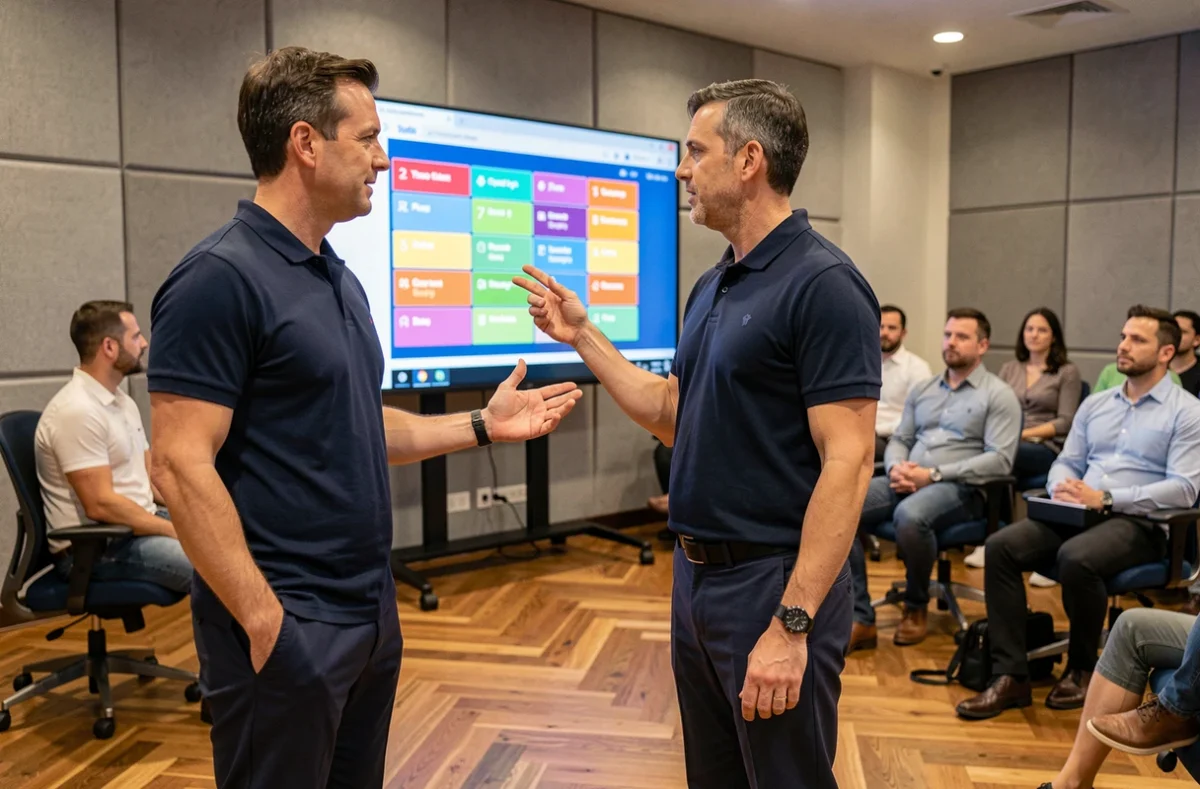
An escape game does not produce the same effect as a collaborative prototyping workshop. The former tests communication under pressure. The latter encourages participants to build together, argue, and prioritize. Both are fun, but they serve different cohesion objectives.
Here are the operational criteria to consider before validating a format:
- The size of the group and its composition (an activity for 12 people does not work for 80, even if “scaled”)
- The level of mutual knowledge among participants (teams that know each other little need formats that force exchange, not competition)
- The available duration (a serious creative workshop requires at least 90 minutes to move past the initial awkward phase)
- The physical space (a virtual reality setup requires different logistics than a culinary challenge)
Feedback varies on this point, but it is often observed that mixed formats (a short competitive phase followed by a longer collaborative phase) work better than purely “challenge”-oriented activities.
Customization of corporate events: the concrete contribution of AI
Innovation in event planning is no longer limited to VR headsets or LED walls. AI now allows for the customization of the experience by group or participant profile. Organizers use it for venue research, participant management, communication, creating tailored programs, real-time translation, and evaluating engagement.
In practice, this means that the same seminar day can offer different paths depending on the teams. A sales group participates in a gamified negotiation challenge while a technical group works on a guided hackathon. Both then come together for a joint debrief.
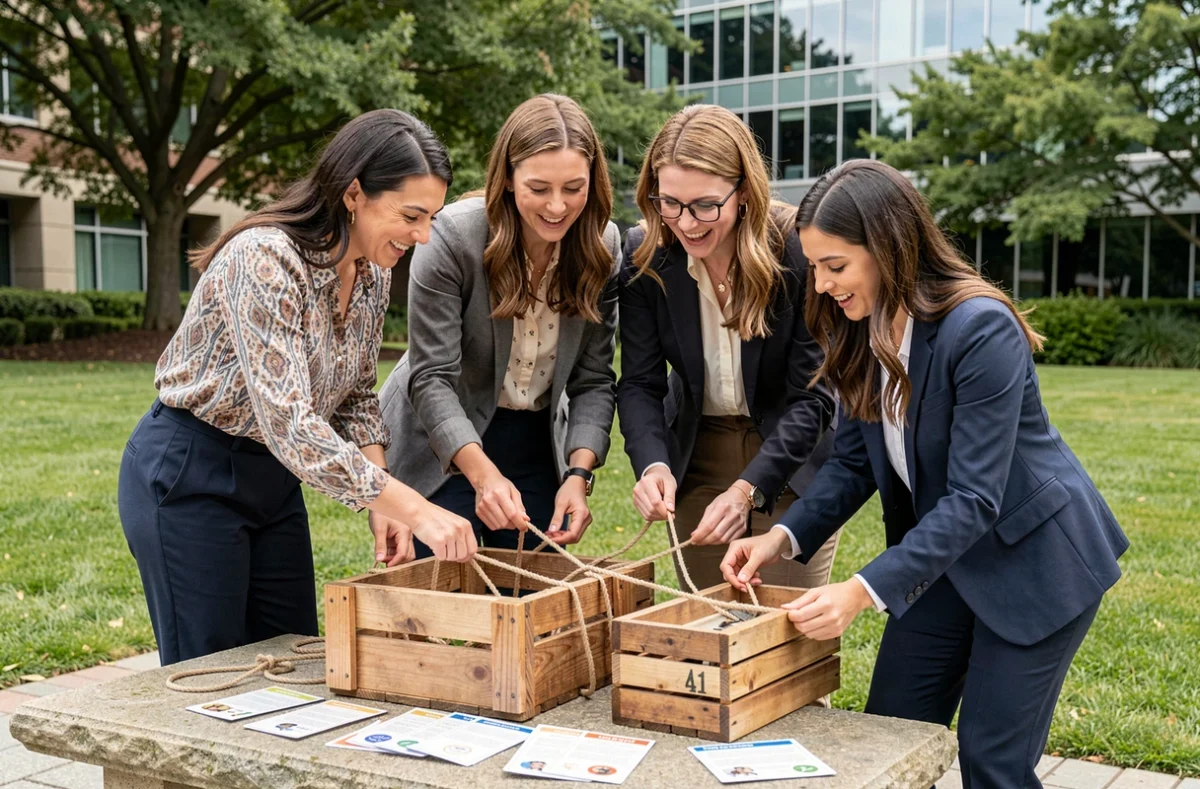
This level of customization changes the game for events with more than 50 people, where a one-size-fits-all format always leads to disengagement. Adapting the fun activity to the participants’ profiles produces measurable engagement, where a generalist facilitation struggles to maintain attention after the first hour.
Eco-responsible seminar: selection criteria for a sustainable event
Environmental responsibility has become a selection criterion for the venue and format, not just an added communication bonus. Organizers seek verifiable data on emissions, public transport accessibility, catering and waste management, and material reuse.
For fun activities, this has direct consequences on the choice:
- Manufacturing workshops (collective mural, prototyping) use recycled or bio-sourced materials
- Digital animations (tablet quizzes, augmented reality) reduce the volume of printed materials
- Outdoor formats (orienteering races, nature challenges) utilize the site without heavy installations
A corporate event perceived as wasteful harms the employer’s image. Employees, especially younger ones, are attentive to the coherence between stated values and the means deployed for a seminar.
Measuring the impact of an activity: beyond “it was nice”
We often end an event with a quick satisfaction survey. It’s better than nothing, but it doesn’t measure much. The real impact of a fun activity is seen in the weeks that follow: do teams communicate differently, have identified tensions decreased, have ideas generated during the workshop been acted upon?
Some organizers are beginning to integrate questionnaires at D+15 and D+30, focused on observable behaviors rather than impressions. This approach allows for justifying the budget to management and refining the choice of formats for future events.
A successful corporate seminar is not recognized by the applause meter on Friday night. It is recognized on Monday morning when teams return to work with common reference points and connections that didn’t exist before.