
Paris welcomes several tens of millions of visitors each year, making it one of the most visited destinations in the world. Discovering Paris without preparation exposes you to long lines, inflated prices, and poorly optimized travel. A few strategic choices regarding transportation, timing, and neighborhoods to explore can radically change the experience.
End of cardboard tickets: what changes for getting around Paris
Since November 5, 2025, cardboard tickets have been removed from all stations and train stations in Île-de-France. This change still surprises many visitors used to buying a booklet at the ticket counter. It is now necessary to anticipate a digital transport ticket or a rechargeable card before heading down to the metro.
Specifically, three options are available upon arrival. The Navigo Easy card, which can be recharged at the station, replaces the old booklet. The Île-de-France Mobilités app allows you to purchase tickets directly on a compatible NFC phone. The Paris Visite pass, simplified since the 2025 fare reform, now covers the entire network without distinction of zones, including trips to the airports, Versailles, and Disneyland Paris.
The choice between Navigo Week and Paris Visite depends on the length of stay and planned excursions. For a weekend concentrated in central Paris, single tickets are sufficient. For a stay of four days or more with outings in the greater suburbs, the all-in-one pass becomes cost-effective. Comparing the two before departure avoids paying twice.
The resources compiled on the Paris Astuce website help quickly identify good transport and visit deals suited to each type of traveler.

Accessibility of the Paris metro: a trap for travelers with reduced mobility
Tourist guides often present Parisian transport as a unified and convenient network. The reality is more mixed. Access to the metro remains severely limited by the lack of elevators in the vast majority of stations.
Parisian buses, on the other hand, are accessible to wheelchairs. For people with reduced mobility, planning an itinerary primarily based on the bus network or tram lines changes the game. Some RER lines also have elevators at their main stations, but not all.
Before building an itinerary, checking station by station for the presence of suitable facilities remains the only reliable method. The Île-de-France Mobilités app offers an “accessibility” filter that indicates equipped stations.
Timing and time slots for visiting Paris without the crowds
The choice of timing weighs as heavily as the choice of location. Several concrete parameters allow you to avoid peak attendance without giving up major sites.
- The early morning slots (site openings) and late afternoons on weekdays offer significantly lower attendance than the 11am-3pm slot
- The first Sunday of the month grants free access to several national museums, but generates a proportional influx. Arriving right at opening or favoring less publicized museums that day allows you to truly enjoy them
- Off-peak periods (January-February, November outside school holidays) combine lower accommodation rates and reduced waiting times at most sites
The reopening of the Notre-Dame towers in September 2025 has already attracted 110,000 visitors in four months. This type of recently reopened site generates a concentrated influx. Booking online several days in advance then becomes the only way to secure a time slot.
Neighborhoods in Paris to explore beyond classic tourist circuits
The central districts concentrate monuments and crowds. A few peripheral neighborhoods offer a denser experience of discoveries, with significantly lower dining prices.
The Canal Saint-Martin (10th arrondissement) combines rehabilitated industrial architecture, independent bookstores, and restaurants at moderate prices. The Buttes-Chaumont (19th) offers one of the steepest parks in the city, with an unobstructed view of Montmartre and the Eiffel Tower, far from the tourist density of the Champ-de-Mars.
The Butte-aux-Cailles neighborhood (13th) retains a fabric of small cobblestone streets and neighborhood bistros that resist standardization. Rue Daguerre (14th), a permanent open-air market, remains a good observation point for Parisian neighborhood life.
Choosing accommodation in a well-connected but outlying neighborhood often allows you to cut the accommodation budget compared to areas close to major monuments. With the metro and bus network, no point in Paris is more than forty minutes from another.
Eating in Paris without a tourist budget
Dining represents a major expense for any stay in the capital. A few practical tips allow you to eat well without paying the price of a terrace facing a monument.
- Parisian bakeries offer lunch deals (sandwich, drink, dessert) at prices well below those of sit-down restaurants, often with quality superior to fast food chains
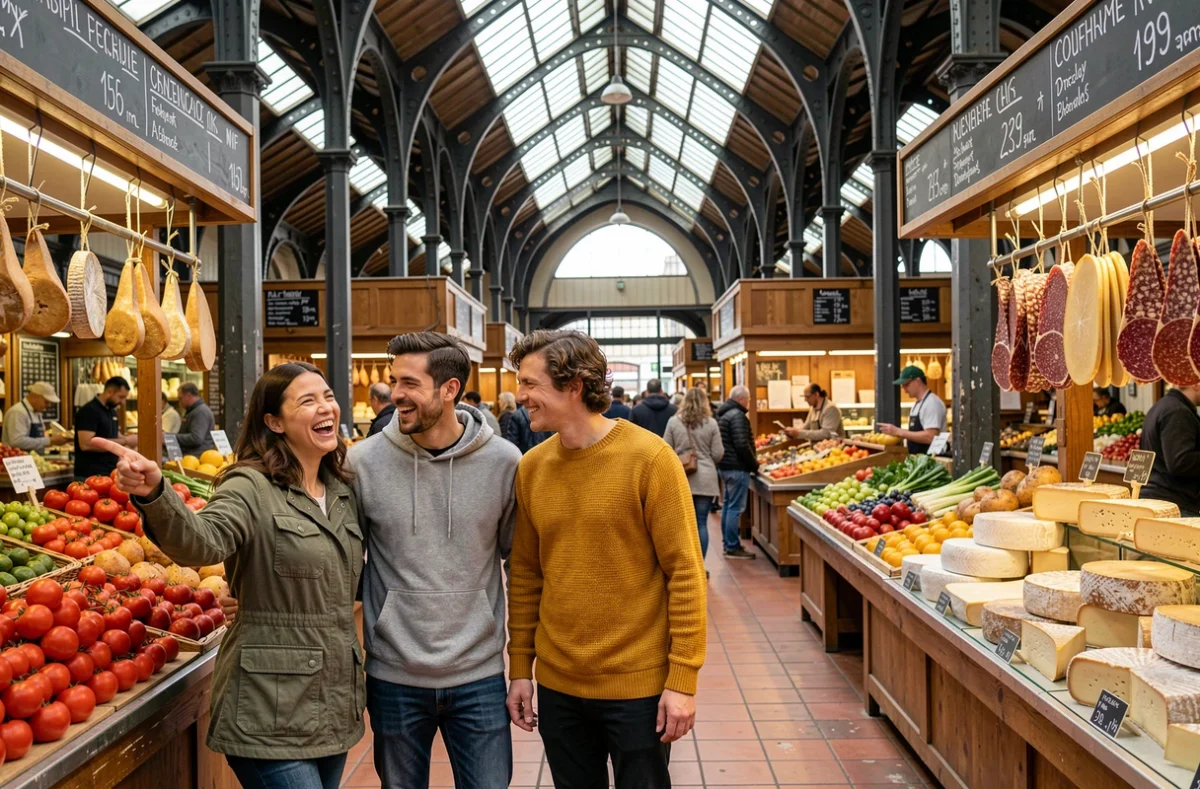
- Covered or open-air food markets (Aligre market, Marché des Enfants Rouges) allow you to put together a varied meal from producer or caterer stalls
- Food courts set up in former industrial spaces (La Felicità in the 13th, Ground Control in the 12th) gather several cuisines at contained prices, with an atmosphere worth the detour
Having lunch early and dining late remains a simple principle that works: lunch deals generally disappear after 2pm, and some restaurants offer reduced prices at the beginning of evening service.
Paris is also discovered through its neighborhood food. Buying fresh products at a market and picnicking in a park or along the Seine remains one of the best pleasure-to-price ratios in the city, accessible to all budgets and all seasons.