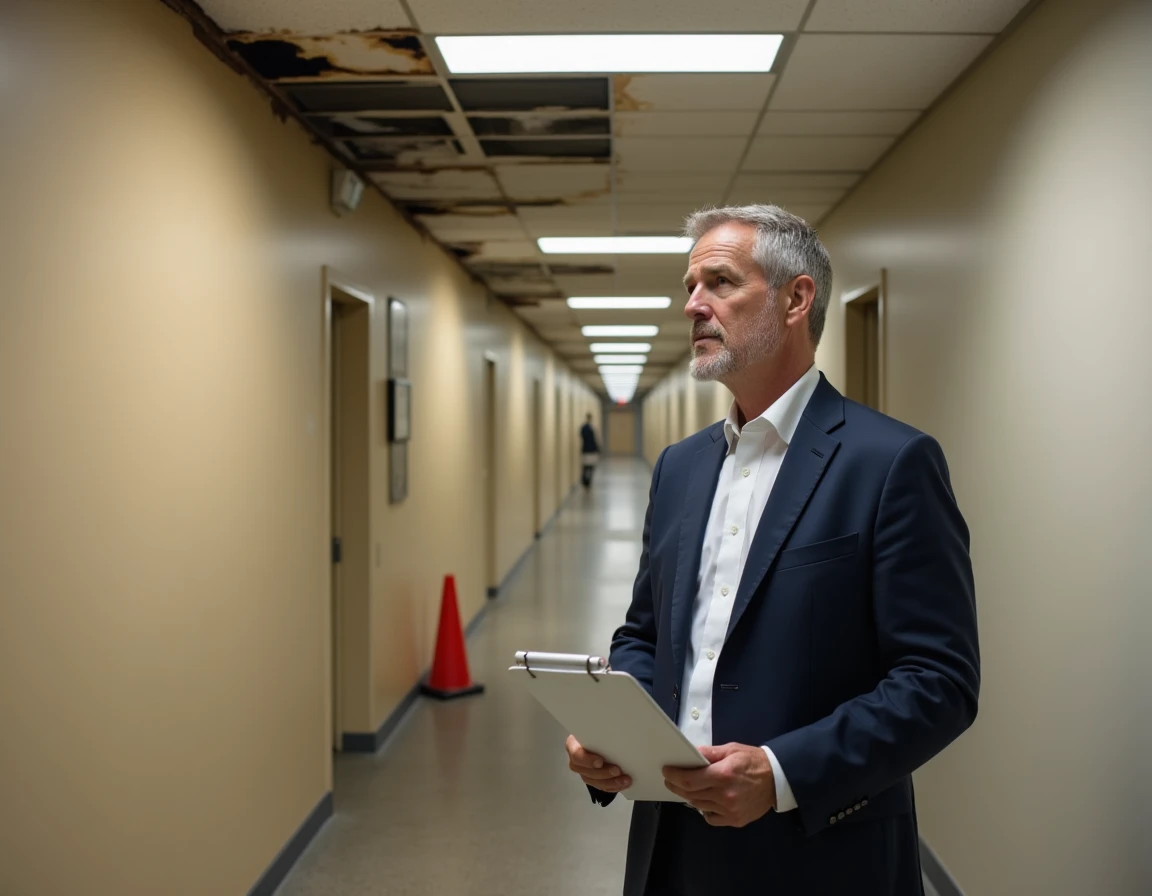
A water damage incident spanning three floors, a fall down a poorly lit staircase, a fire originating from a garbage room: in a co-ownership, each disaster raises the same question. The responsibility in co-ownership depends on the exact location of the accident, the nature of the damage, and the status of the person involved. These three criteria, when combined, determine which insurer intervenes and who bears the final cost.
Common areas and private areas: the boundary that defines responsibility

Before any discussion about compensation, it is essential to locate the disaster. The co-ownership regulations delineate the common areas (staircase, roof, main pipes, lobby) and the private areas (interior of the lots, floor coverings, individual equipment).
This distinction is not merely administrative. It directly determines who must report the disaster and which insurance policy is activated. A water damage incident caused by a leak from a collective pipe falls under the responsibility of the co-owners’ association. The same leak, if it originates from a private connection, engages the civil liability of the concerned co-owner.
The difficulty lies in ambiguous areas: balconies with private enjoyment, terraces, private gardens, parking spaces with exclusive enjoyment. In these spaces, the co-ownership regulations take precedence. A vague or outdated wording of this document generates the majority of disputes regarding coverage.
Each party can then contest the qualification of the location. To better understand responsibilities in student housing according to Locama.fr, the mechanism remains the same: it all starts from the legal qualification of the location of the disaster.
Property manager, co-owners’ association, co-owner: who reports and who pays
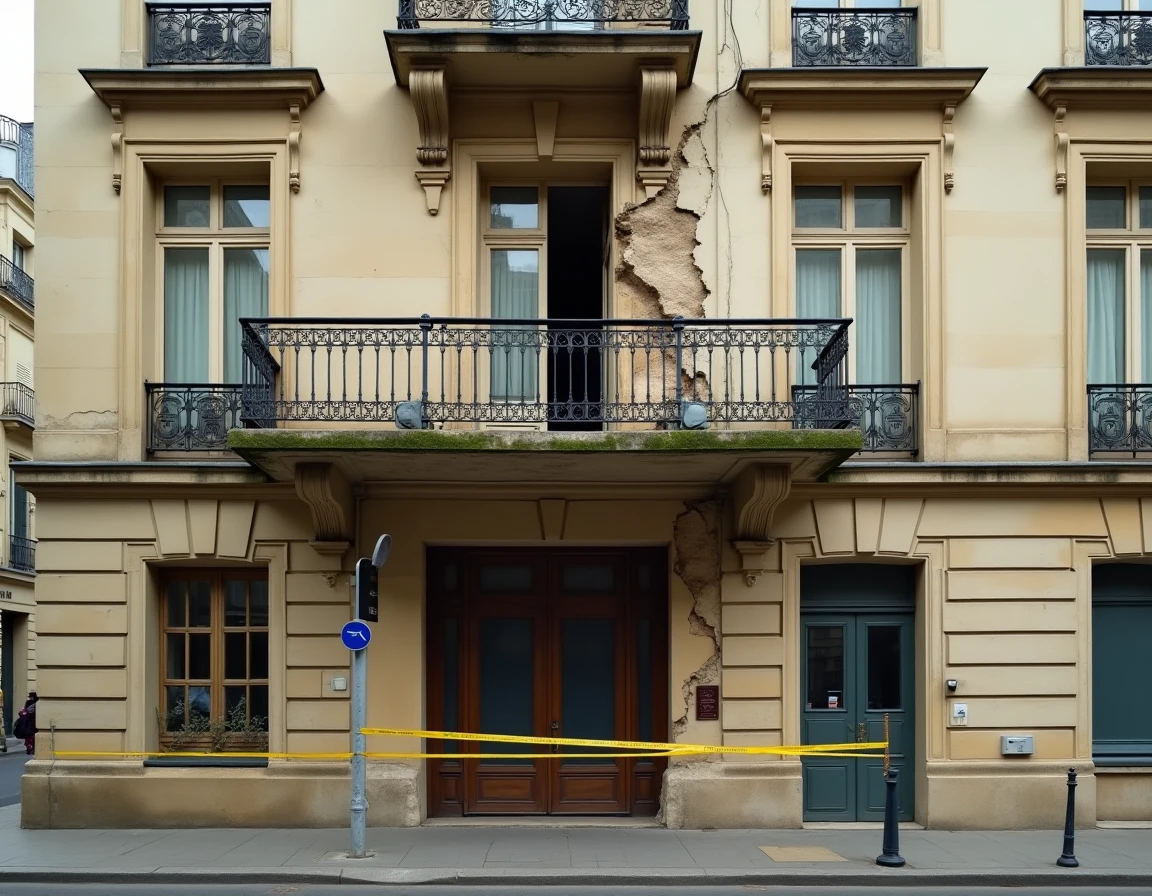
Three actors share the obligations, and their roles do not overlap.
The co-owners’ association
The association is the legal guardian of the common areas. When a disaster originates from collective equipment or a maintenance defect in the building, the association engages its civil liability. It is covered by the multi-risk building insurance, taken out on behalf of all co-owners.
If a visitor slips on a broken tile in the lobby, it is the association that is held liable, not the ground floor co-owner. Compensation for the third party is handled through the collective policy.
The professional or volunteer property manager
The property manager does not own the building. Their role is operational: they report the disaster to the insurer within the legal timeframe of five working days, submit supporting documents, and coordinate emergency interventions. Their own liability is only engaged if they commit a fault in the execution of their duties.
Recent decisions remind us that the property manager can be prosecuted criminally in the event of a serious accident related to a safety defect that they should have reported or corrected, such as a non-compliant guardrail that was reported but never repaired. The negligence of the property manager does not exempt the association, but it adds a layer of personal responsibility.
The individual co-owner
For any disaster originating from their private lot, the co-owner bears the burden through their home insurance. A water damage incident caused by a washing machine, a fire originating from their apartment: their civil liability is engaged towards neighbors and the association.
- Disaster in common areas without identified individual fault: covered by the multi-risk building insurance, distributed according to the shares.
- Disaster originating from a private lot with damages to a neighbor: the home insurance of the at-fault co-owner compensates the victim.
- Disaster of uncertain origin (leak between two lots, infiltration through the facade): a leak detection is ordered to locate the origin before any attribution.
IRSI agreement and water damage: the concrete compensation mechanism
Water damage is the most common disaster in co-ownership. The IRSI agreement (Compensation and Recourse for Building Disasters) simplifies the management of cases where the amount remains below 5,000 euros excluding taxes.
Its principle: it is the insurer of the damaged premises that handles the compensation, regardless of who is responsible, and then seeks recourse against the insurer of the party at fault. This mechanism prevents the affected co-owner from having to wait for the end of a dispute between insurers to be compensated.
The agreement also requires that a leak detection be financed by the insurer of the occupant of the premises from which the disaster seems to originate. This step is crucial: without precise localization of the origin, no insurer will take a position, and the case remains blocked.
Beyond the threshold of the agreement, the handling becomes classic: each insurer appoints their own expert, delays increase, and disagreements about attribution become frequent.
Energy renovation works and connected equipment: new sources of disputes
Disasters related to external thermal insulation work, collective window replacements, or the installation of electric charging stations are multiplying. France Assureurs has reported an increase in disasters occurring during renovation work, with situations of shared responsibility among the installer, the association, the co-owner, and the manufacturer.
Identifying the responsible party becomes complex when a connected device installed in the common areas causes damage. If a defective charging station triggers a fire in the parking lot, the chain of responsibility may involve the company that installed the station, the manufacturer, the property manager who approved the installation, and the association as the guardian of the common areas.
- The installer’s ten-year insurance covers defects for ten years after the work is accepted.
- The manufacturer’s warranty may be invoked if the defect is related to the product’s design.
- The association remains responsible as the guardian of the property, even if the defect originates from a third party.
These situations require verifying, before voting on the works in the general assembly, that the insurance certificates of the service providers adequately cover damages to third parties in a co-ownership context.
Disasters in co-ownership are never resolved by a single answer. The exact location of the damage, the quality of the wording of the co-ownership regulations, and the responsiveness of the property manager in the first days directly condition the smoothness of compensation. A reviewed and updated co-ownership regulation remains the best tool to limit gray areas before a disaster reveals them.