The year 2024 has reshuffled the cards in the technology sector, less through the emergence of radically new concepts than through the rapid maturation of already initiated technologies. Generative artificial intelligence, European regulatory framework, energy constraints of data centers: the high-tech trends of 2024 can be seen in both consumer products and in legislation and electricity consumption reports.
Generative AI in 2024: from prototype to production infrastructure
Language models have reached a new level of integration into professional tools. Where 2023 still saw many isolated experiments, 2024 has seen companies deploy generative AI across complete workflows: automated report writing, support ticket sorting, marketing visual generation.
This scaling up has revealed a constraint that product announcements often mask: the electricity consumption of data centers is skyrocketing. The International Energy Agency estimates that they consumed around 415 TWh of electricity worldwide in 2024, and anticipates a significant increase by 2030, driven in particular by AI. Connecting new data centers to the electrical grid is becoming a bottleneck as critical as the power of chips.
The tech trends of 2024 are followed and analyzed on specialized media such as techmeup.fr, which covers these developments as they unfold.
European AI Act: the regulatory framework that changes the game for AI technologies
The European regulation on artificial intelligence, the AI Act, came into effect on August 1, 2024. Its specificity: the obligations are gradual, not immediate. The prohibitions on systems with unacceptable risk apply first, while the requirements for general-purpose models or high-risk systems follow distinct deadlines spread over several months.
For companies developing or using AI tools, this gradual approach imposes a timeline for technical compliance. Specifically, this means documenting training datasets, assessing bias risks, and implementing human oversight for systems classified as high risk.
The AI Act also applies to providers outside the European Union as long as their systems are used in the internal market. This is a strong signal for the global digital sector, even though full implementation will still take several years.
Right to repair: the European directive affecting all high-tech devices
Adopted in 2024, the directive (EU) 2024/1799 on the right to repair was published in the Official Journal on July 12. Member States have until summer 2026 to transpose it into their national law.
Its principle: to require manufacturers to offer repair of their products for a reasonable period after purchase, by making spare parts and technical documentation available. This directly affects smartphones, laptops, tablets, and connected household appliances.
The consequences for consumers go beyond simple troubleshooting:
- Manufacturers will have to provide spare parts at a reasonable price, which could change current pricing policies where replacing a screen sometimes costs as much as a new device.
- The repair documentation must be accessible to independent repairers, not just to authorized networks.
- Design practices that deliberately make repair difficult (soldered components, proprietary screws) will be more strictly regulated.
This directive marks a turning point for the sustainability of technological products, a perspective still marginal in discussions about high-tech trends, often focused on performance and novelty.

Augmented reality and 5G connectivity: concrete applications in 2024
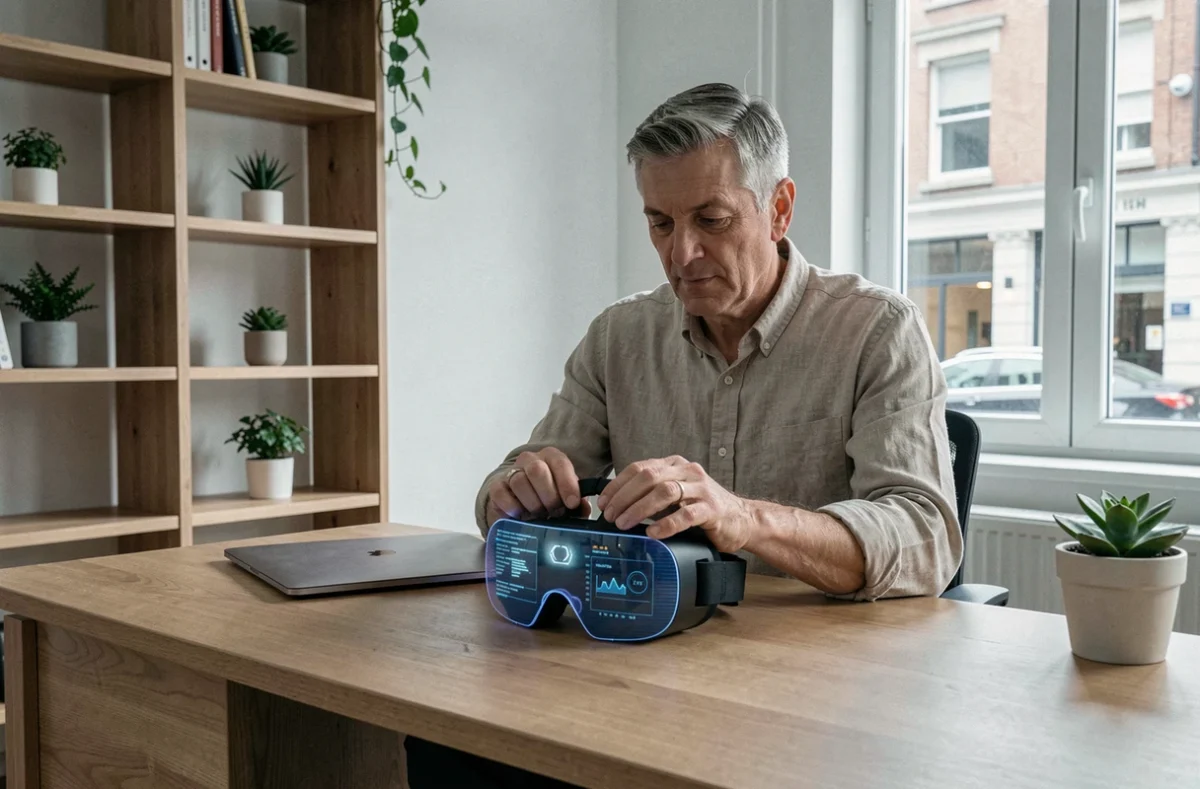
Augmented reality has matured thanks to the combination of two factors: more precise embedded sensors and sufficient network bandwidth to process data in real time. The widespread deployment of 5G in urban areas has allowed professional applications to move from the experimental stage to regular use.
In the industrial sector, augmented reality-assisted maintenance allows technicians to visualize instructions overlaid on physical equipment. In medicine, clinical trials are using AR to guide surgical procedures with increased precision.
The general public has mainly seen the arrival of natively integrated AR features in online shopping applications: virtual try-on of glasses, visualization of furniture in a room, previewing paint jobs. These uses, once anecdotal, have reached a level of fluidity that makes them genuinely useful.
Energy consumption of data centers: the downside of technological trends in 2024
The rise of generative AI and the proliferation of cloud services have placed energy infrastructure at the center of concerns. The availability of electricity now conditions the pace of digital expansion, as much as algorithmic advancements.
Several regions around the world are facing tensions regarding the connection of new data centers to the grid. The electricity demand related to data centers, estimated at around 415 TWh in 2024 by the International Energy Agency, is expected to continue to grow significantly, driven by the training and inference of AI models.
This observation is prompting part of the sector to explore alternative avenues:
- Establishing data centers near renewable energy sources to reduce transmission losses.
- Developing specialized chips that are less energy-intensive than general-purpose GPUs for certain inference tasks.
- Recovering waste heat from servers to supply district heating networks.
The high-tech trends of 2024 are not limited to the products announced on stage during keynotes. The AI Act imposes a binding regulatory timeline, the right to repair directive alters the very design of devices, and the energy question sets a physical limit on the growth of digital services. These three dimensions—legal, environmental, and material—will weigh as heavily as software innovation on the technological trajectory of the coming years.