Trends do not do things by halves: what was once reserved for Eastern palaces is now making its way into urban apartments, transforming codes and shaking up certainties about what a contemporary interior can be.
Geometric patterns from Eastern traditions are experiencing a revival in the eyes of current designers. Where fixed techniques were expected, surprise takes center stage: polished concrete and painted metal now serve as a canvas for ancient know-how. Heritage opens up, becomes mixed, and moves against the current of conventions.
No need to strictly follow historical codes anymore. We dare to mix unexpected colors, to create dialogue between Eastern furniture and minimalist lines, and to create breaks that better reveal the personality of each space. This newfound freedom responds to the desire for personalization, to the quest for authenticity that increasingly drives interior decoration enthusiasts.
The essentials of Eastern style: materials, colors, and patterns to know
In the world of Eastern decoration, every detail counts, every finish tells a story. Natural materials dominate, affirming the place of carved wood and wrought iron in the key pieces. Handcrafted wood captures light, while iron shapes the space with its elegant curves. Geometric and floral patterns can be found on screens, doors, and objects, giving each Eastern interior a unique imprint.
On the floor, Berber rugs, Kilim, Persian, Afghan, or Egyptian rugs rhythm the space. Wool, natural fibers, and raw or delicate textures change appearance depending on the light, always offering new reflections. Cotton, silk, linen: these materials weave a story that spans centuries, while mosaic and zellige create precious frescoes on walls and floors, a signature of a way of life.
In terms of colors, richness is never lacking. Ochre, terracotta, turquoise, gold, copper, white, Majorelle blue, emerald green: the palette draws inspiration from craftsmanship, earth, and sky, to better warm and illuminate each room. Oriental patterns, between sacred geometry and arabesques, infuse a presence, a narrative dimension to each object.
To refine your gaze and draw concrete ideas, visiting Deco Asaiss online offers a vibrant panorama of materials, inspirations, and trends. The Eastern style continues to reinvent itself, drawing from both the memory of gestures and the boldness of contemporary creation.
How to integrate Eastern decoration into every room without a false note?
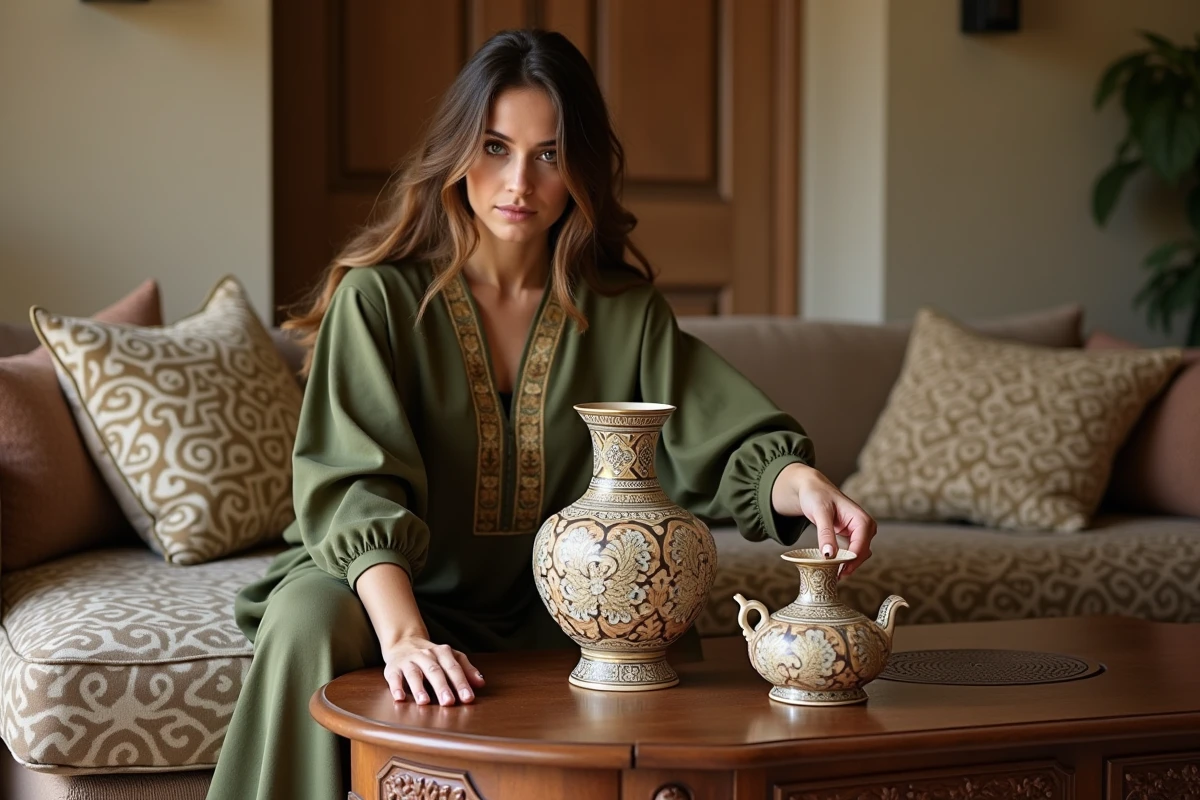
In the living room, Eastern decoration expresses itself through small, controlled, and chosen touches. A low sofa or an Eastern bench serves as an anchor point, dressed with embroidered cushions and a silk throw. The carved wooden coffee table invites conviviality, while a Berber rug or Kilim structures the room and brings immediate warmth. Betting on a pierced lantern or a few colored glass votives allows for playing with light, revealing the finesse of the geometric patterns and creating a cozy atmosphere.
In the bedroom, the goal is to bring softness without ever weighing down the space. A brass mirror, a wall art piece with arabesques: a few well-chosen elements are enough to establish the identity of the place. The pouf, the wooden chest, and a collection of small objects recall craftsmanship while remaining understated. A fragrant candle completes the ensemble, creating an ambiance conducive to relaxation and rest.
The bathroom offers a perfect playground for zellige or mosaics. These graphic coverings bring elegance and character. Wall sconces in copper or brass diffuse soft light, while textiles like embroidered towels and light curtains complete the decor. Eastern decoration thus finds its place in every room, adapting with finesse to create a contemporary and balanced Eastern decor ambiance.
Inspiring ideas and practical tips to personalize your interior
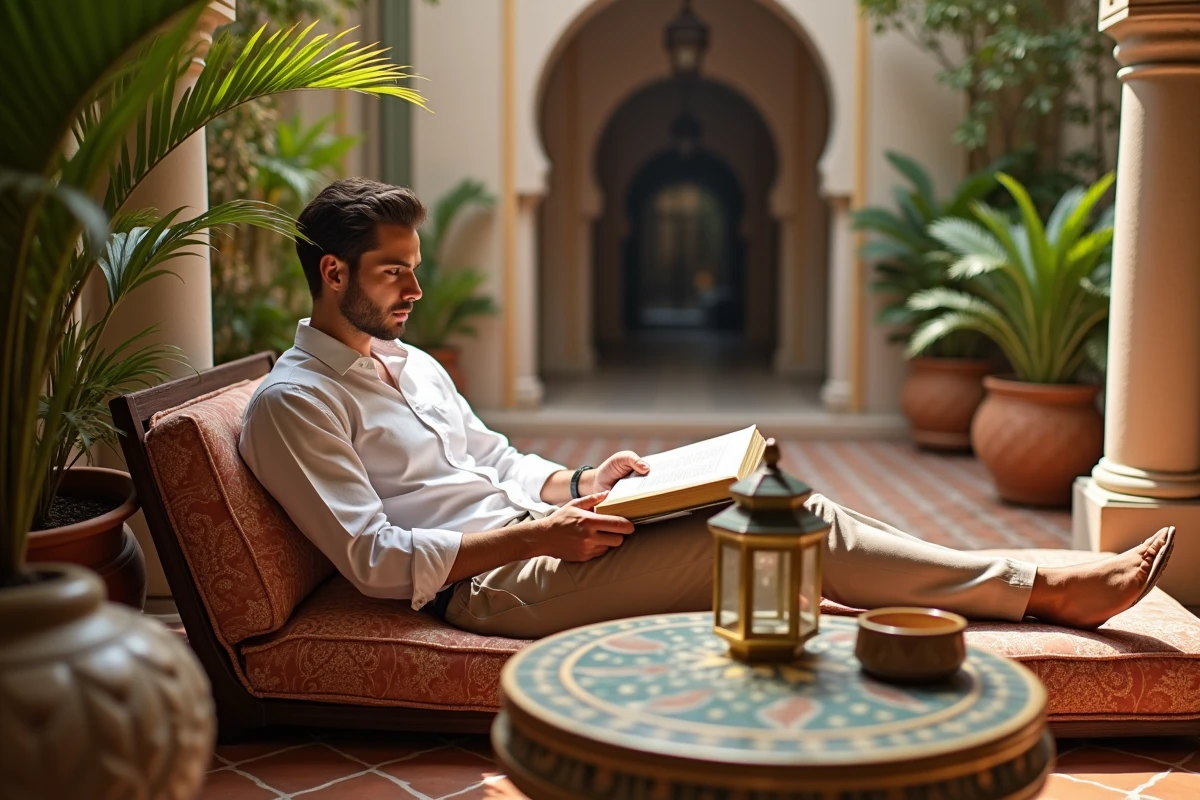
Eastern decor transforms any space by infusing it with character and harmony. To enhance this atmosphere, pairing rattan furniture and wooden stools adds a handcrafted, warm, and authentic touch. The woven basket, both a decorative accessory and a practical storage element, easily integrates into all rooms, bringing structure and lightness.
It is impossible to ignore the expertise of Moroccan artisans. Their mastery of weaving and their use of plant fibers give rise to airy suspensions, baskets, and plant supports. Installing a plant fiber pendant above the dining table evokes the refined atmosphere of a riad or a traditional dar, while highlighting environmental protection through the use of sustainable materials from fair trade.
Here are some concrete ideas to energize your Eastern decoration:
- Use a woven basket as an aesthetic storage solution in the living room or bedroom.
- Repurpose the wooden stool as a side table or a plant support.
- Mix rattan furniture with colors inspired by the Majorelle Garden: deep blue, emerald green, touches of ochre.
Eastern decor willingly blends with current influences, such as Scandinavian decor, to create hybrid, understated interiors bathed in light. Drawing inspiration from a rug in Eastern hues, choosing a coffee table with clean lines, adding a few well-chosen accessories… Every detail shapes a unique interior, without ever falling into excess. This allows for imagining a space where tradition and modernity move hand in hand, in line with your desires.