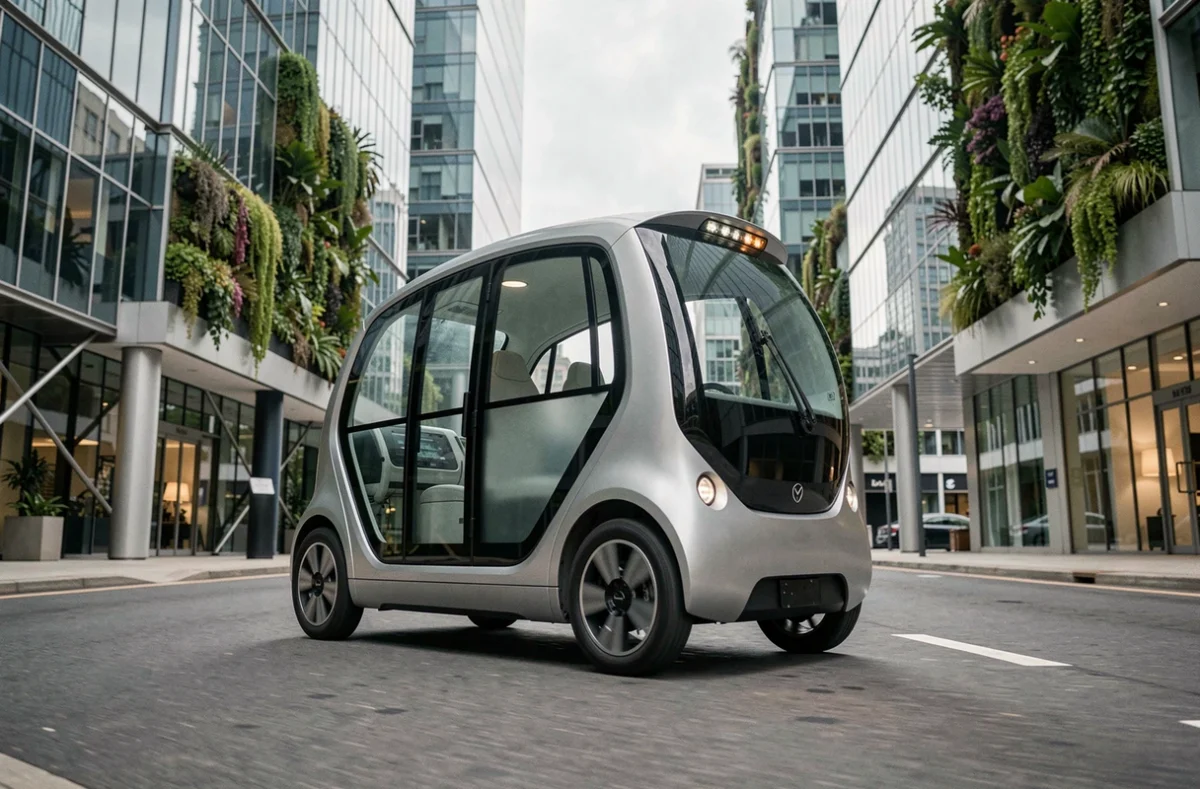
Daily commutes in the city often resemble an obstacle course: traffic jams, missed connections, noise. Behind this familiar observation, several innovative means of transportation are moving from the prototype stage to a regulatory and operational phase. The question is no longer whether these technologies exist, but how they are concretely integrated into our mobility networks.
Autonomous delivery robots: French regulation paves the way
You may have come across, in a report or a video, these small wheeled devices that deliver packages on the sidewalk. In France, their legal framework has just become clearer. Autonomous delivery robots can now be certified to operate on public roads.
The system is not a blanket approval. Local authorities retain control: they define the zones, schedules, and authorized routes. As of mid-August 2026, no robot had yet received its certification. The gap between the text and reality illustrates a recurring pattern in innovative mobility: technology arrives before the administrative infrastructure.
This point is rarely addressed in Carré Presse news, which nonetheless covers the topic of future transportation. The logistical challenge is real: these robots aim for last-mile delivery, the most expensive and polluting segment of the chain.
Autonomous vehicles in Europe: the challenge of cross-border interoperability

Several companies are preparing large-scale deployments of driverless vehicles across the European continent.
The most significant new development does not concern the onboard technology. Eighteen EU member states signed a declaration of intent in June 2026 to create cross-border testing sites. The goal: to test autonomous vehicles in real conditions, between two countries, with compatible rules.
Why is this coordination so crucial? An autonomous vehicle programmed according to French standards may encounter different signaling or priority rules in Belgium or Germany. Without harmonization, each country remains a technological island. Regulatory interoperability could weigh as heavily as sensor performance in the development of this mobility.
An international framework for the safety of driverless vehicles
Meanwhile, international regulation on fully driverless vehicles took a step forward in September 2026. The text imposes monitoring of safety throughout the vehicle’s lifecycle and the systematic recording of data related to automated driving.
This mechanism creates unprecedented traceability. Every incident, every unexpected behavior of the system must be documented. For manufacturers, this is a heavy burden. For users, it is a guarantee that safety does not stop at the factory gate.
Autonomous shuttles and freight: experiments that change the scale
The traditional competitors of this article often list Hyperloop, flying taxis, and drones as transport of the future. These projects exist, but their operational horizon remains unclear. Autonomous shuttles, however, are already in operation.
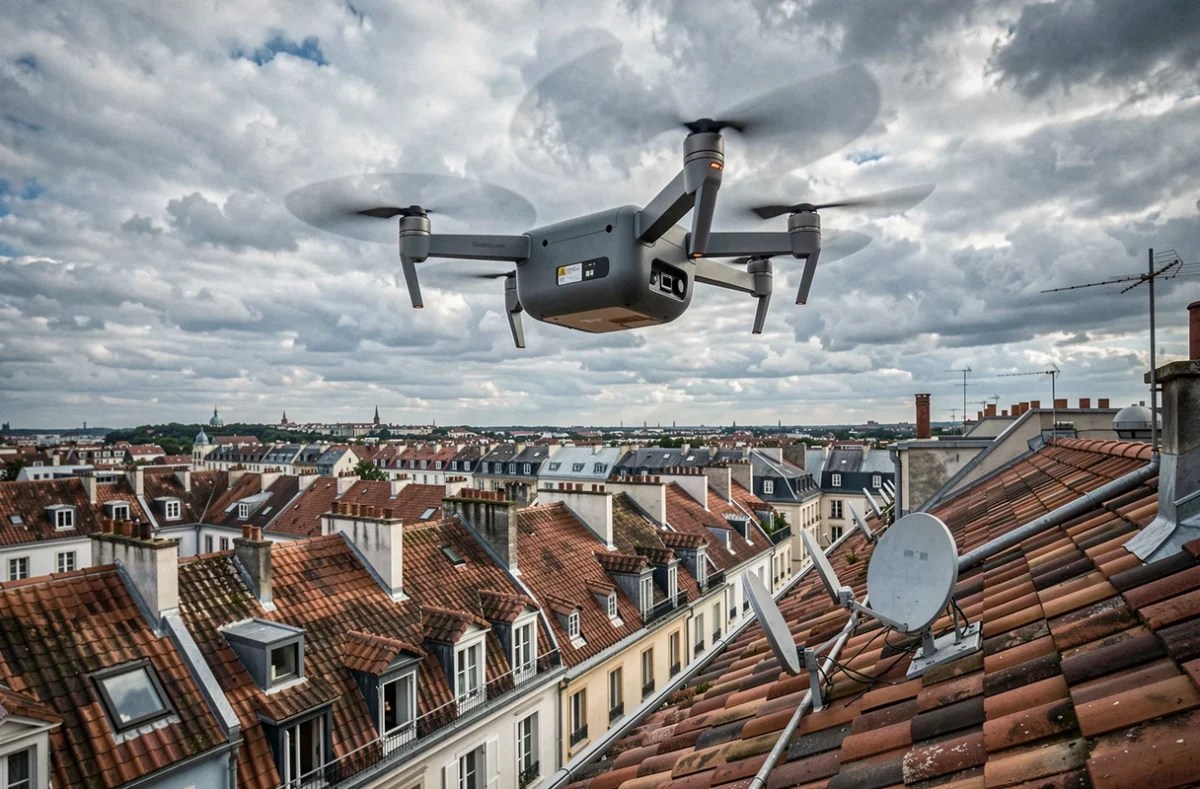
Autonomous freight represents a concrete lever for reducing emissions in road transport, the most challenging segment to decarbonize. Several initiatives combine electric vehicles, automated piloting systems, and optimization of goods flows.
Specifically, these projects are testing trucks capable of driving in convoy on highways, with the first vehicle being driven by a human and the following ones operating automatically. This technique, called “platooning,” reduces fuel consumption through aerodynamic effects.
- Driverless urban shuttles integrated into existing public transport networks, with payment by card or traditional subscription.
- Semi-autonomous freight convoys on highways, reducing fuel consumption through aerodynamic effects between vehicles.
- Last-mile delivery robots, operating on electric batteries and moving at pedestrian speed on sidewalks.
Batteries and materials: the often-overlooked technological lock
All these vehicles, whether they drive, fly, or deliver packages, share a common dependency: the battery remains the most critical component of electric mobility. Its energy density determines the range. Its weight influences consumption. Its cost conditions the final price of the vehicle.
Research in materials is progressing on several fronts. Solid electrolyte batteries promise higher density and faster recharging. Manufacturers are also investing in recycling end-of-life batteries, a circular economy issue that is gaining momentum with the increase in the fleet of electric vehicles in France.
The charging network constitutes the other side of the problem. An electric autonomous vehicle that runs out of battery cannot improvise. The network of charging stations directly conditions the deployment of autonomous fleets, whether they are urban shuttles or long-distance trucks.
Drones and urban air mobility: between regulation and reality
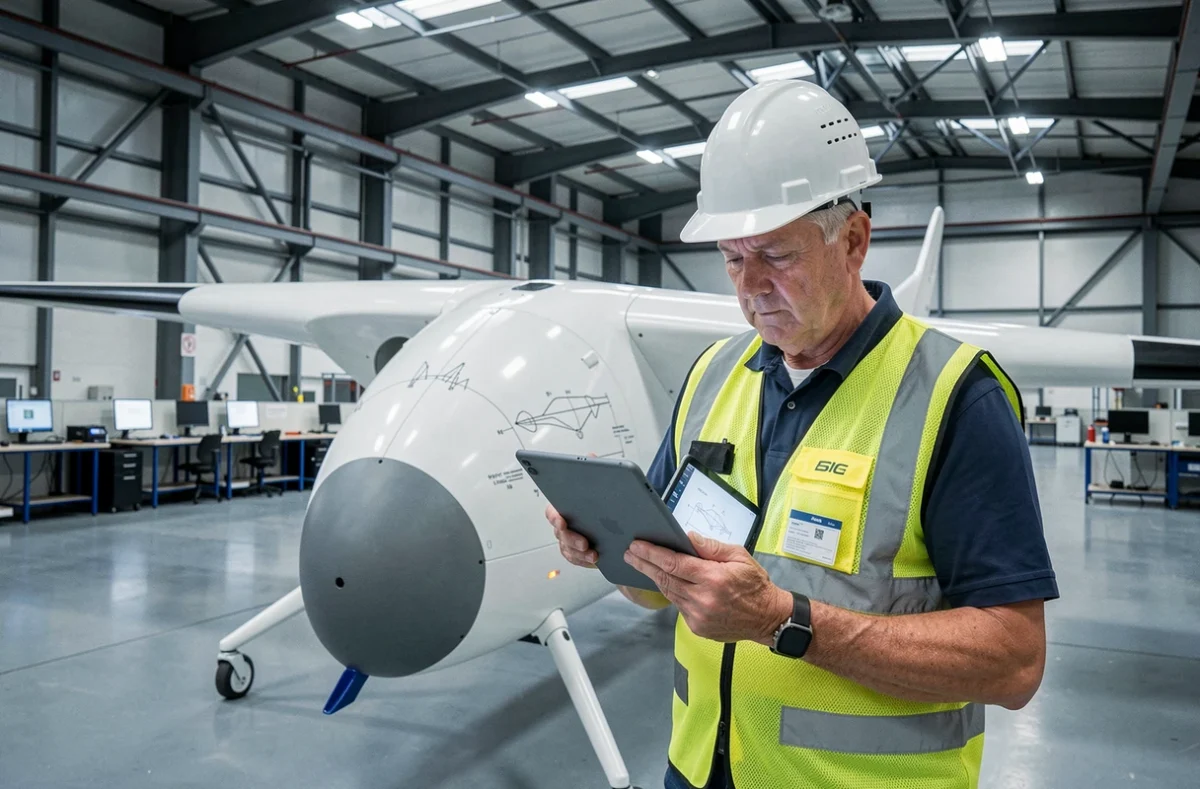
Delivery drones and flying taxis (officially called “vertical takeoff and landing vehicles”) fuel the most spectacular projections.
The main difficulty is not getting these devices to fly. It is integrating them into an already crowded airspace, above populated areas, with strict noise and safety requirements. Communication technologies between vehicles and ground systems are still under development.
- Certification of aircraft by civil aviation authorities, a process that takes several years per model.
- Management of low-altitude air traffic, currently nonexistent for regular flows of commercial drones.
- Social acceptability: rotor noise and perceived surveillance hinder residents’ acceptance.
The innovative means of transport that will shape our future cannot be reduced to a list of spectacular prototypes. The scaling up depends on regulatory, industrial, and social locks. Certification, interoperability between countries, and the charging network weigh as much as technological prowess in the actual speed of this transformation.