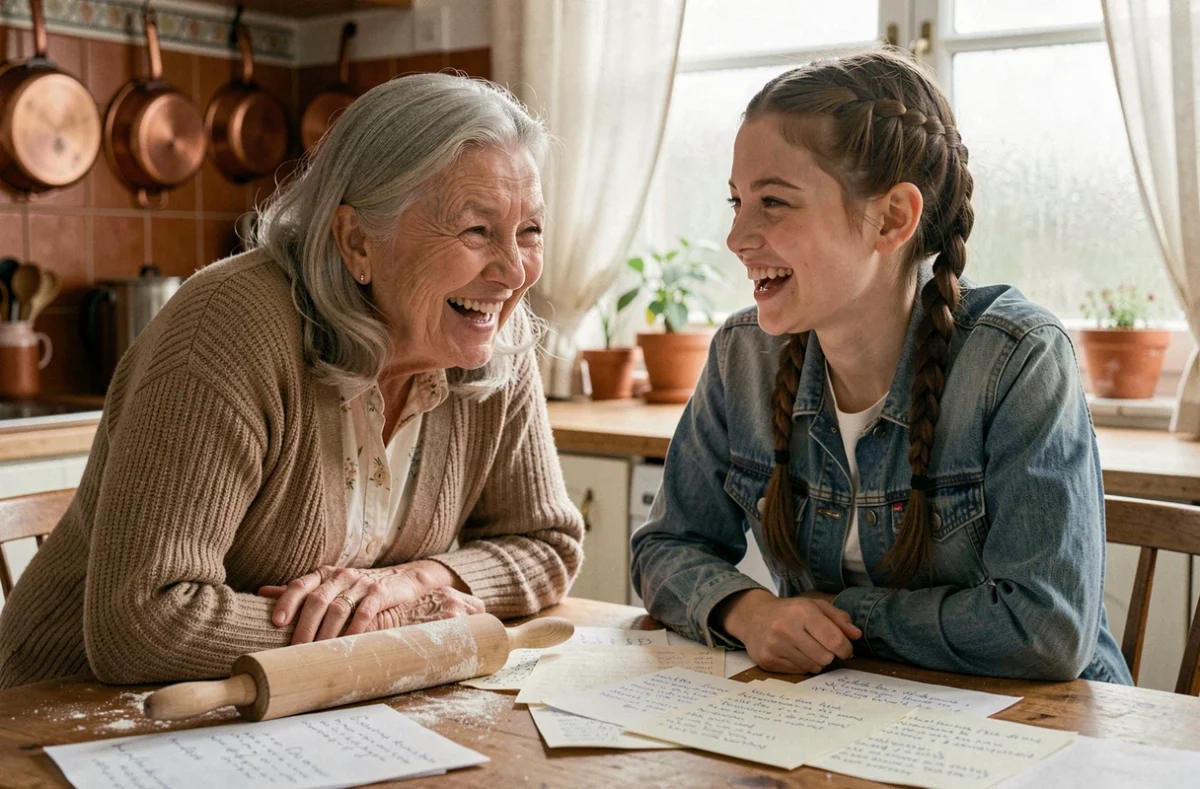
Intergenerational solidarity refers to the range of exchanges, formal or informal, between people of different ages within a community. These exchanges are not limited to family support: they encompass shared housing arrangements, associative programs, and structured public policies. Understanding their mechanisms allows us to grasp why recent research evaluates them as a genuine public health intervention, rather than merely a factor of social cohesion.
Intergenerational Solidarity and Public Health: A Paradigm Shift
For a long time, intergenerational programs were seen as social connection initiatives, useful but difficult to measure. This framework has evolved. A systematic review published in 2025 by Sánchez-Cazalla and Gutiérrez-Domingo in Archives of Gerontology and Geriatrics Plus repositions these programs as full-fledged public health interventions. The studied effects focus on social participation, well-being, and autonomy of older adults.
This repositioning has a direct consequence: it pushes public funders to demand more rigorous evaluation protocols. The study also highlights the need to better standardize these evaluations to compare results from one program to another. For local authorities, this means that a well-designed intergenerational project can now fit into a public health prevention plan, just like a vaccination campaign or a program for adapted physical activity.
Several French associations are already working within this framework. Some organizations seek to document the concrete effects of connecting generations, and it is possible to learn more about Dididou to understand the reasons driving the development of these initiatives.

Intergenerational Shared Housing: When Solidarity Becomes a Housing Policy
Solidarity between generations does not only play out in workshops or occasional meetings. Intergenerational shared housing is experiencing a rise in public policy, according to several French institutional sources. The principle is simple: a senior with a spacious home welcomes a younger person (student, young professional) in exchange for regular companionship and sometimes a modest rent.
This model shifts the focus. Intergenerational solidarity is no longer just an individual or family relationship. It becomes a matter of urban planning, social housing, and aging policy. Specifically, the local authorities supporting these initiatives act simultaneously on three levers:
- The fight against senior isolation, by ensuring daily presence and regular exchanges within the housing
- Access to housing for young people in tight areas, where rents make residential autonomy difficult
- The prevention of loss of autonomy, as cohabitation encourages the maintenance of an active social routine
This triple effect explains the growing interest of social landlords and metropolitan areas in these models. The city of Paris, for example, showcases dedicated housing initiatives for seniors that incorporate this intergenerational dimension.
Intergenerational Solidarity in Rural Areas: Specific Needs Still Undercovered
Most media-highlighted initiatives are concentrated in large urban areas. Rural areas remain an underutilized operational angle, even though needs there are often more acute. Jiménez Rodríguez and his colleagues, in a 2026 publication, describe an intergenerational health promotion program specifically designed for rural settings. The approach combines health prevention, solidarity between ages, and the maintenance of community life.
In rural areas, the scarcity of public services (doctors, shops, transport) makes dependence on neighbors and the local community more structuring than in cities. An intergenerational program in this context does not fulfill the same function: it does not complement an existing offer; it partially replaces it.
Concrete Barriers to Overcome
Geographical distance complicates the organization of regular activities. Volunteers are fewer and often older themselves. The mobility of young people to urban centers for their studies or jobs reduces the pool of potential participants.
These constraints impose adapted formats: less frequent but longer meetings, the use of digital tools to maintain the connection between sessions, and coordination led by municipalities rather than national associations. The work of Holloway et al. published in Frontiers in Public Health in 2024 confirms that territorial anchoring is a determining factor in the success of these programs.
Values Transmitted and Social Development: What Research Actually Measures
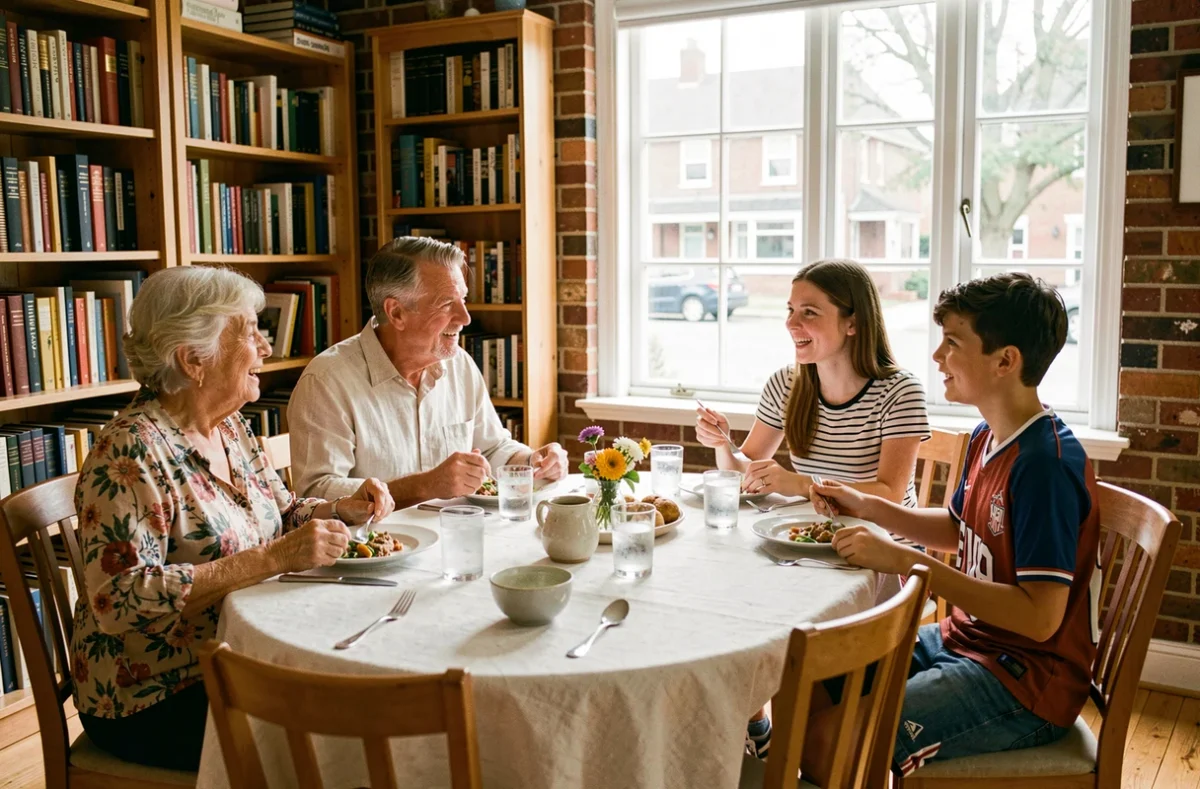
Discussions about the transmission of values between generations are common, but often vague. What research evaluates focuses on more precise indicators: the reduction of feelings of loneliness, the increase in social participation measured by the number of weekly interactions, and the evolution of self-reported mental health.
Among young participants, intergenerational programs produce documented effects on perceptions of aging. Spending regular time with older people changes negative representations associated with old age, which has implications for future recruitment in care and support professions.
For seniors, the most robust benefits concern the maintenance of functional autonomy. Staying socially active delays the loss of autonomy in a measurable way, a result that aligns with the findings of the systematic review from 2025 mentioned above.
A Global Social Policy Challenge
France Stratégie, in its forward-looking work for the period 2035-2050, includes intergenerational solidarity among the levers for rethinking solidarities in an aging France. The issue transcends the associative sphere to enter the realm of structural social policies, at the intersection of demographics, work, and health.
Intergenerational solidarity produces effects that sectoral policies (housing, health, employment) struggle to achieve in isolation. Its strength lies in the fact that it acts on multiple dimensions simultaneously, provided that programs are evaluated with the same rigor as any other public intervention. It is precisely this demand for evidence that today transforms a social ideal into an operational tool.